

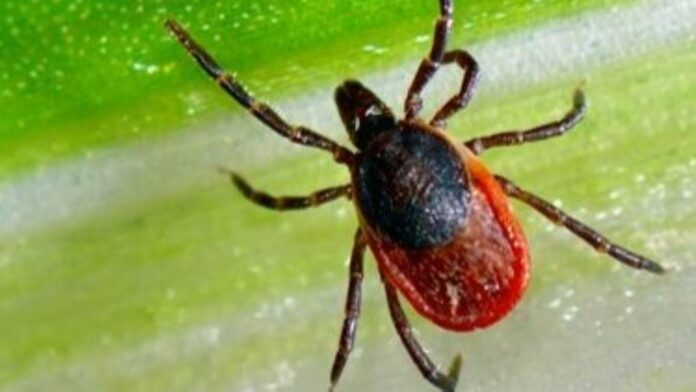

Warmer spring weather is bringing increased tick activity across Saskatchewan and Alberta, prompting health officials to remind residents to take simple steps to protect themselves outdoors.
Ticks are most active from early spring through the fall, with peak activity typically occurring in May and June. In Saskatchewan, the most common species during this time are the American dog tick and the Rocky Mountain wood tick, which thrive in tall grass, brush, and wooded areas.
Health officials say the risk of encountering ticks rises during activities such as hiking, camping, and hunting, particularly in areas with prolonged exposure to vegetation.
“While most tick bites don’t cause diseases, blacklegged ticks may cause Lyme and other tick-borne diseases and are showing up in places they haven’t before,” said Dr. Simon Kapaj, a medical health officer with the Saskatchewan Health Authority.
In Alberta, similar conditions exist. Tick season generally runs from spring to fall, and ticks can become active whenever temperatures climb above about four degrees Celsius.
The Rocky Mountain wood tick is the most encountered species in Alberta, especially in grassy and wooded environments, while blacklegged ticks — the species that can carry Lyme disease — remain relatively rare but are expanding their range in parts of Canada.
According to Alberta Health Services, ticks can carry infections such as Lyme disease, although the overall risk remains low. Officials continue to encourage precautions to prevent bites and reduce the chance of illness.
How to reduce your risk
Health officials in both provinces recommend several simple measures to avoid tick bites:
- Wear long sleeves, pants, and closed-toe shoes
- Tuck pants into socks and choose light-coloured clothing
- Use insect repellent containing DEET or Icaridin
- Stay on cleared paths and avoid tall grass and brush
- Check yourself, children, and pets after spending time outdoors
- Shower soon after being outside to wash off any loose ticks
Pet owners are also urged to regularly check animals that spend time outdoors, as ticks can be brought into homes.
Lyme disease risk remains low
In Saskatchewan, officials say the risk of Lyme disease is low, as most ticks found in the province do not carry it. Cases reported in recent years have largely been linked to travel outside the province.
Similarly, in Alberta, most tick species do not carry the bacteria that cause Lyme disease, although surveillance programs continue to monitor for its spread.
What to watch for
If bitten, residents are advised to remove the tick carefully using fine-tipped tweezers and clean the area. Symptoms of tick-borne illness may include fever, fatigue, headaches, and, in some cases, a distinctive “bull’s-eye” rash.
Health officials say anyone who develops symptoms after a tick bite should seek medical attention.
As outdoor activity picks up across the region, officials stress that awareness and simple precautions remain the best defence against tick-related health risks.


