

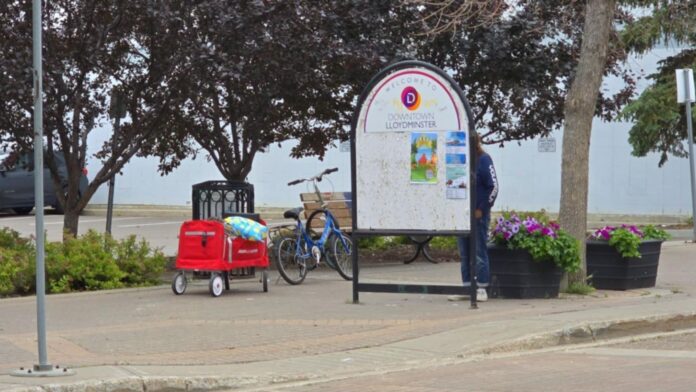

The broken windows in business store fronts spark the concern of business owners in downtown Lloydminster, but the need for transitional housing speaks even more as a solution to people living on the streets and the rise in public drug use in the summer months.
People are expressing their concern and frustration. The cry remains not in my backyard, even though advocates like Residents in Recovery, executive director, Tyler Lorenz, make the case for transitional housing in the face of some 250 people who are on the streets of Lloydminster.
“The active addiction activities downtown persist as a result of a lack of housing and resources available to them in this community,” says Lorenz.
The drug use in public is a police concern that the Lloydminster RCMP is aware of.
“Obviously, we do see a rise in some of these matters in the summer months, and our members are tackling it the best they can,” says Sgt. Brad Mouland. “I would encourage people to continue to call us about these crime-related matters, as it’s tough to follow up if we don’t get called.”
Proposed solution
Lorenz supports the proposed 48-bed transitional housing development put forward by the Lloydminster Social Action Coalition Society that operates the Men’s Shelter.
“[It’s] the best solution for our current unhoused population. This 48-bed proposal would provide shelter for a significant portion of our unhoused population. It would move them from the street into a housing option where they pay rent and learn how to become a good tenant. The wrap-around support moves individuals seeking recovery into housing and treatment options, best suited to meet their needs,” says Lorenz.
The executive director sees “a significant positive impact” on moving people off the streets and into transitional housing, and notes that “90 per cent of unhoused people do not want to be on the streets.”
“Giving individuals housing moves them off the street, where all of the issues are taking place. Residents in Recovery, the Spark Foundation, and the Men’s Shelter currently operate a number of transitional housing units and complexes within our community, most of which are downtown or downtown adjacent. All of these operate without the public even knowing that this is what they are.”
That view contrasts with the anxious feelings of residents who feel that unhoused people should be removed from downtown, where all the services they require are located.
“They blend into communities and operate with fewer issues than any drug house or noisy neighbours. These are the neighbours we all want. Residents in Recovery actually operated a Sober Living house next to the Men’s Shelter’s Transitional Housing complex for years without incident. Had the house not been sold, we would still be operating there now. This is what we can expect from a well-run transitional housing program,” concludes Lorenz as he makes the case for managed transitional housing near social service programs located downtown.
Transitional housing is a midway step between emergency crisis and a long-term solution with wrap-around support services. Advocates point to the success of having the services close by and hence the need to locate people in transitional housing in downtown areas where employment and social services already exist.
Related reading:
- Lloydminster spending $150K to get housing projects shovel-ready – June 30, 2025
- 246 people are homeless in Lloydminster, Oct. 23 – Dec. 13, 2024
- 2024 Point in Time Homeless Count – City of Lloydminster website


