
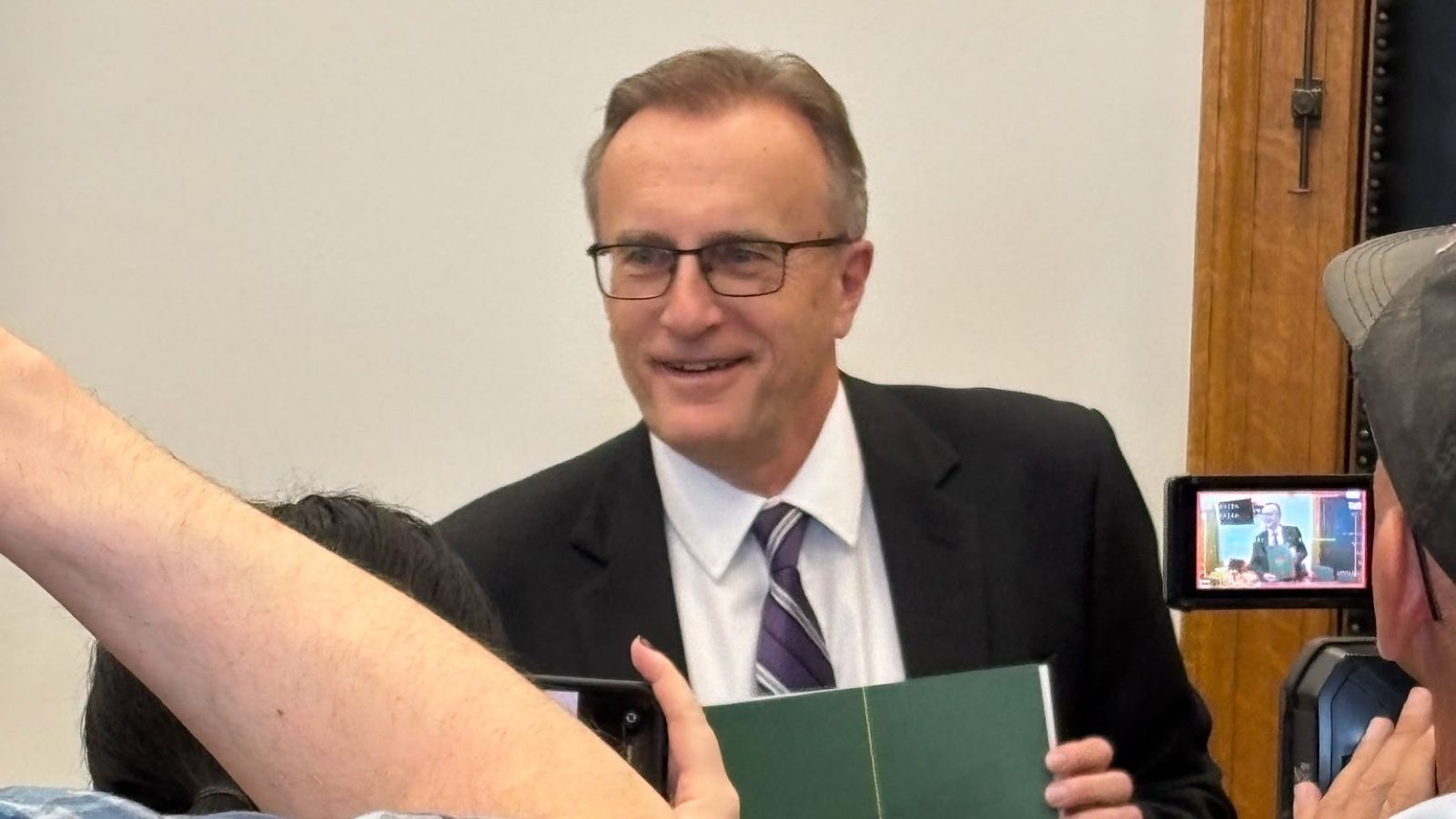

Saskatchewan is projecting an $819‑million deficit in its 2026‑27 budget, tabled Wednesday, Mar. 18 by Finance Minister Jim Reiter, who framed the plan as one that “protects Saskatchewan” amid global turmoil and economic pressures.
The budget forecasts $21.4 billion in revenue against $22.2 billion in spending, with the province expecting to return to balance in four years. Updated third‑quarter numbers released on Wednesday show the current year’s deficit has already reached $1.21 billion, driven by lower revenues from oil, gas and the carbon‑tax removal at SaskPower.
Affordability, health care and infrastructure lead spending
The government highlighted more than $2.5 billion in affordability measures, including another $500 boost to personal and spousal tax exemptions, a five‑per‑cent increase to the low‑income tax credit and a permanent one‑per‑cent small business tax rate. The Active Families Benefit will also double.
Health care receives a record $8.5 billion, including expanded urgent care, more diagnostic imaging, new addictions treatment spaces and major capital projects such as the Prince Albert hospital expansion and planning for multiple new urgent care centres.
The Capital Plan totals $4.3 billion, with investments in schools, roads, hospitals and long‑term care.
Safety, social services and education
The province is increasing funding for policing and launching a Small Town and Rural Policing Grant. Social supports include new shelter and supportive housing spaces and a three‑year, 10‑per‑cent annual increase to disability residential benefits.
Education operating funding rises to $2.5 billion, with more specialized classrooms and support for school food programs. Several school construction projects move ahead, including a new school in Shellbrook, which is the premier’s riding.
Reactions split
The Canadian Taxpayers Federation criticized the government for rising debt, noting interest payments will surpass $1 billion this year as debt climbs to $26.8 billion.
The Saskatchewan Federation of Labour said the budget fails to address wages and affordability while warning that planned workforce reductions in government and Crowns will hurt services.
The Saskatchewan Chamber of Commerce welcomed the continued small business tax rate, workforce development funding and infrastructure commitments, while urging a clear path back to balance.
The Saskatchewan NDP called it a “bad news budget,” citing rising fees, a lack of new cost‑of‑living measures, and what it says are broken promises on balancing the books and addressing health and education needs.