

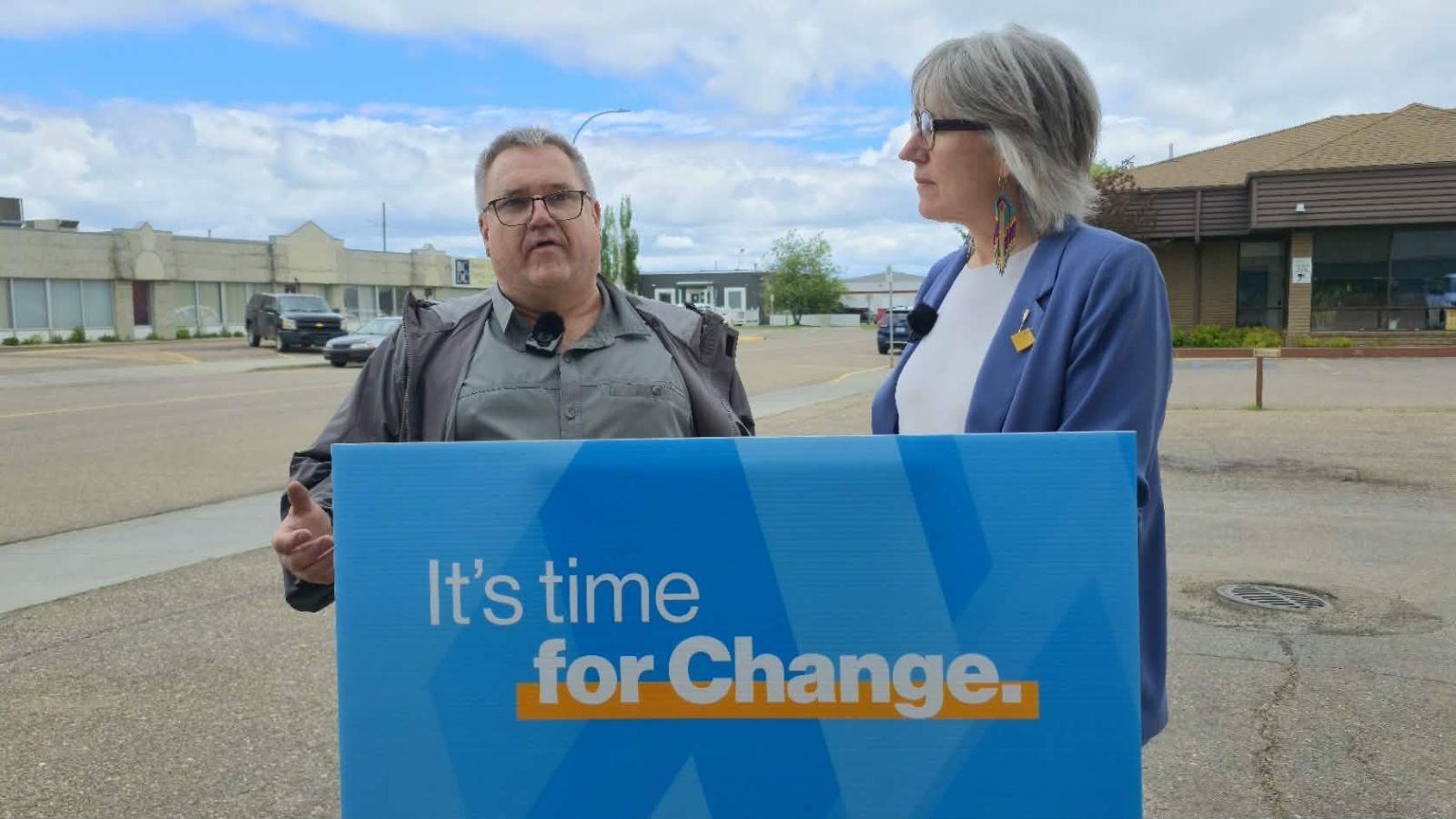

The Sask NDP is ringing the alarm bells over addictions, mental health, homelessness and crime in Saskatchewan including in Lloydminster.
Erika Ritchie, NDP’s shadow minister for government relations and social services says Lloydminster officials are saying the city has spent $3 million dealing with “social disorder.” Another $325,000 is earmarked for the Clean City Team and the Enforcement and Navigation Unit.
Ritchie says, according to Lloydminster officials, the taxpayer dollars are being spent “because of the lack of investment in root causes or systematic solutions from higher levels of government.”
“This is money that should be going towards core services like roads, public facilities and fire protection. But instead municipalities here and across the province are being forced to step in and fill gaps left by Scott Moe’s failed policies,” says the NDP critic.
Tyler Lorenz, founder and former director of Residents in Recovery says, “If people when they are ready are able to get into a treatment program, they are going to do it.”
The duo was speaking outside the Saskatchewan Court on Thursday, June 11.
“What we found is that many of the people who are unhoused right now, are on waitlists,” says Lorenz. “They want to be in treatment. Instead this government looks at – well let’s force them into treatment.”
The Saskatchewan government has committed to creating 500 new addiction treatment spaces by March 2027 as part of its Mental Health and Addictions Action Plan, with 355 of those spaces now available to residents.
But recovery lifestyle advocates like Lorenz points to what he terms a waste of money through policies like the Compassionate Intervention Act which allows the province to institute involuntary treatment.
“Things really need to change. We need to really look at the problem and not putting band aids or trying to find solutions for the symptoms of the problem,” says Lorenz.
“There’s just no where accepting people at that time when somebody needs to go somewhere,” says Lorenz.
Wait time for in-patient addiction treatment
Estimates on provincial wait time for in-patient addiction treatment is about six weeks in Saskatchewan and Alberta, with the provinces having over the phone helpline options in both Alberta and Saskatchewan.
But Lorenz points out not even the hospitals have capacity.
“We just have these open doors and people just get more and more frustrated. They give up on the system. It’s systemically blocking them from getting better,” says Lorenz, who also emphasizes that it costs less to money into better treatment options.
“When you look at the costs; societal costs and the government costs of having social discord downtown, the cost is already there. They are already spending all of that money in different areas. We are paying it on the enforcement side. Rather than on the treatment side,” says Lorenz. “It’s a matter of diverting those funds to a real solution.”
Lorenz says the advent of Residents in Recovery has helped many people to get back on their feet, but he adds, “as far as the actual crisis goes, I don’t think we have come a long way.”
Evidence-base options
Ritchie shares across Saskatchewan, everyone has been affected in some way by mental health and addictions, even in her family circle.
“This affects all of us, and we have a duty to help our fellow citizens, and a find a way through this that in the end will improve the quality of life for everybody.”
Ritchie sees the need for a collaborative approach across all sectors. Yet from an NDP perspective, their strategy would be to provide an evidence-based approach to seeking solutions to addictions and its societal consequences.
“A lot of times what we have seen is ideology driving the policy as opposed to following what we hear from the experts, from the frontlines and from people who are directly affected,” says Ritchie. “You listen to them and understand what is needed.”
Lloydminster’s bi-provincial status
The issue of Lloydminster having the provincial border driving down the middle of 50 Avenue remains a torn in the side of which province is responsible and who will pay for services.
Ritchie sees the benefit of a collaborative approach that listens to frontline workers and elected representatives.
“We are here to do the work – roll up our sleeves have the hard conversations and look for the solutions.”
For Lorenz who founded Residents in Recovery and sought funding from both Alberta and Saskatchewan during his tenure as executive director, the challenge was real in providing services to Lloydminster Alberta residents with Saskatchewan funds.
“We were funded for some of our beds by the Saskatchewan government, but then we were licensed by the Alberta government. We couldn’t put Lloydminster Alberta people into those Saskatchewan beds,” says Lorenz. “It’s a nightmare.”
Lorenz bemoans, “These cross-border issues when it comes to our marginalized community are just devastating. It’s just a barrier that doesn’t allow for them to ever get out.”


