
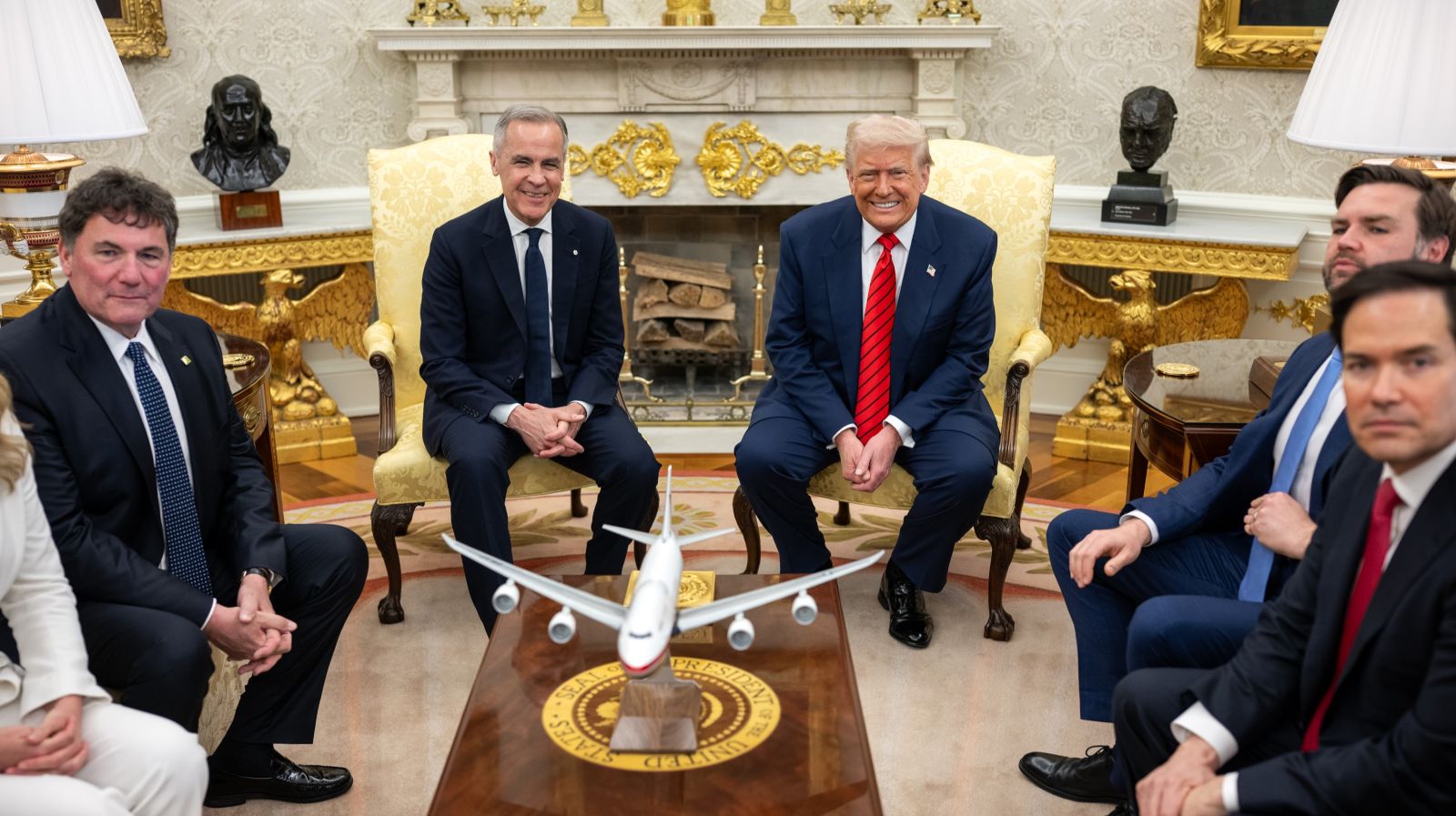

Canada suspended trade negotiations with the United States and pledged dollar-for-dollar retaliation as additional 50-per-cent U.S. tariffs took effect early Saturday on about $28 billion in Canadian goods.
Prime Minister Mark Carney said he directed Canadian negotiators to return to Ottawa on Friday, Aug. 21, after last-minute changes to proposed U.S. terms prevented an agreement.
“Last-minute changes in the U.S. proposed terms were unfair, uneconomic, and called into question the reliability of any deal,” Carney said in a statement released by the Prime Minister’s Office.
The tariffs took effect at 12:01 a.m. ET Saturday, Aug. 22, under a presidential proclamation issued Aug. 18.
U.S. President Donald Trump originally set Aug. 19 as the implementation date before granting a three-day postponement to allow more time for negotiations.
Carney estimated the affected Canadian goods were worth about $28 billion. The Office of the United States Trade Representative put the value at nearly $20 billion US.
Tariffs to be matched dollar for dollar
Carney said Canada would match the new tariffs dollar for dollar to protect Canadian workers and businesses.
Ottawa had not identified the products, tariff rates or implementation date for its newly promised countermeasures. The federal government already maintains a separate list of American products subject to existing Canadian counter-tariffs.
Carney also promised additional support for affected workers and businesses. He said the government had provided nearly $25 billion in support over the previous 18 months.
The White House identified wine, hockey sticks and cement among the Canadian products subject to the new duties. Certain dairy products and alcoholic beverages are also covered.
A White House fact sheet issued July 20 said the tariffs apply to covered products even if they qualify for preferential treatment under the Canada-United States-Mexico Agreement.
CUSMA still in force
The agreement, known as CUSMA in Canada and USMCA in the United States, is in force despite the suspension of bilateral trade negotiations.
The Office of the United States Trade Representative said July 1 that Washington had declined to renew the agreement in its existing form during a scheduled review but had not terminated the pact.
The White House said energy and potash are excluded from the new tariffs, along with goods subject to separate U.S. national-security duties under section 232. Certain other products, including some fish and critical minerals, are also excluded.
Those exclusions apply to the new tariff package and do not necessarily exempt products from other U.S. duties.
Trump introduced the new measures under section 338 of the Tariff Act of 1930. The legislation allows the U.S. president to impose duties of up to 50 per cent in response to what the administration considers discriminatory treatment of American goods.
The White House cited provincial and territorial restrictions on American alcohol sales, Canadian dairy import quotas and policies affecting U.S.-made vehicles. It said Canadian imports of American alcoholic beverages fell about 81 per cent from March 2025 through February 2026 compared with the same period a year earlier.
Dairy product policy cited
U.S. Trade Representative Jamieson Greer accused Canada of giving European Union dairy products more favourable treatment and limiting access for American vehicle manufacturers.
“President Trump took decisive action to hold Canada accountable for its retaliation and discrimination,” Greer said in a July 20 statement announcing the tariff measures.
Carney said Canada had sought to preserve tariff-free access to American markets and secure lower U.S. tariffs on strategic Canadian industries.
He said the proposed agreement fell short of those objectives.
Carney said his government would focus on expanding international trade partnerships and strengthening Canada’s domestic economy following the suspension of negotiations.