

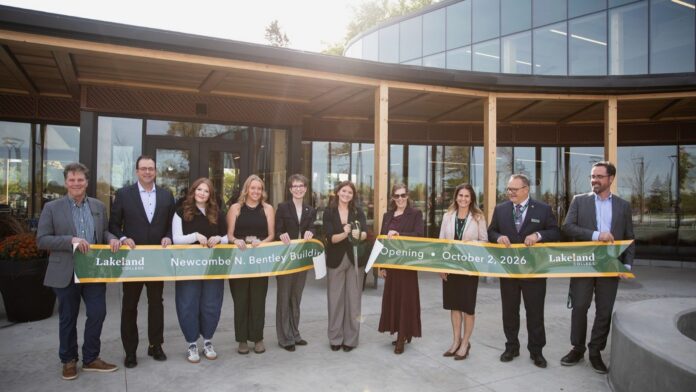

Lakeland College has officially opened the renewed Newcombe N. Bentley Building, unveiling a modernized learning environment designed to support hands-on training, student success and workforce development.
College officials, students and guests gathered Friday, Oct. 2 to celebrate the completion of the project, which transforms a building that served generations of students for more than 50 years into a hub for human services and interior design technology programs.
The renovated facility features flexible classrooms, specialized labs, collaborative workspaces and student gathering areas aimed at enhancing learning and student engagement.
“The opening of the Newcombe N. Bentley Building represents an investment in our students, our workforce and the communities we serve,” said Lakeland College president and CEO Dr. Alice Wainwright-Stewart.
She said the building’s modern learning spaces better reflect how students learn today and how they will work after graduation, while also recognizing the Government of Alberta’s $13.3-million investment in the project.
The renewed building includes makerspaces, breakout areas and specialized learning environments that connect classroom instruction with real-world practice.
Students in Lakeland’s human services programs will have access to dedicated child and youth care counselling practice rooms, while early childhood education students can use a new play lab, child development learning spaces and observation areas. The facility also provides access to an outdoor natural playscape designed to support exploration and outdoor learning.
Lakeland’s on-campus child-care centre has also been relocated to the building, creating opportunities for early childhood education students to gain practical experience while supporting families within the campus community.
Interior design technology students now have dedicated design studios, individual workstations, a computer lab, project and sample rooms, and specialized printing and technology spaces. College officials say the upgraded facilities will allow students to develop and showcase design concepts using industry-standard tools and technology.
The building also features the Otôtemiwewin Student Lounge, a space intended for cultural learning, programming, ceremony and student connection.
Wainwright-Stewart said investments in campus infrastructure go beyond improving facilities.
“When we invest in our learning environments, we’re investing in much more than a building. We’re investing in our students, our workforce and the future of our communities,” she said.


